The Hormuz blockade is a war Congress never declared
*Opinion*
By Source Reporters Newsdesk
Thu, 16 July 2026 · 3 min read
*Opinion*
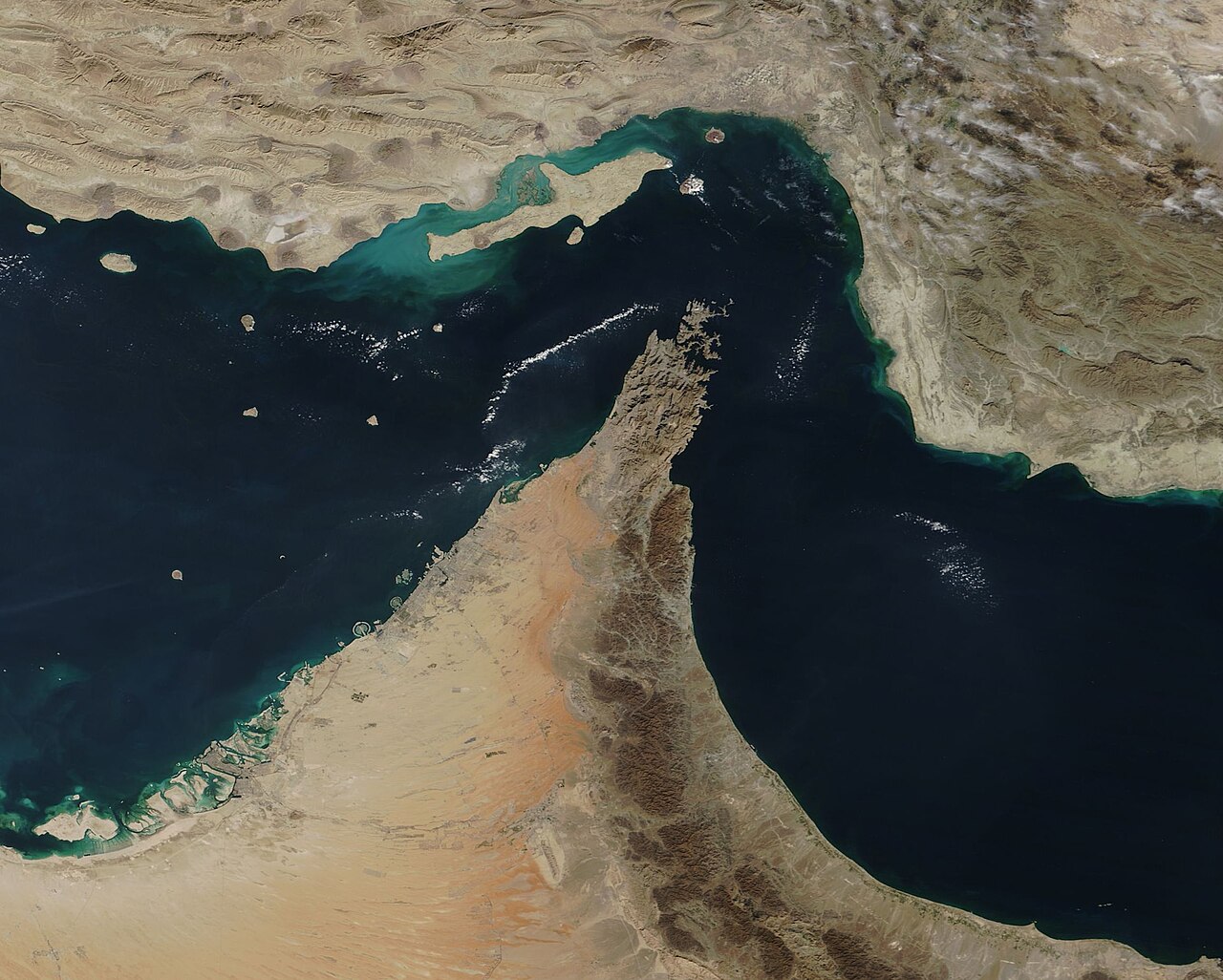
The United States is now in its sixth day of open exchanges of fire with Iran, and the confrontation is drifting toward a blockade of the Strait of Hormuz that could choke a major share of the world's oil trade. According to BBC reporting citing Reuters, Tehran launched fresh attacks on US military bases in Jordan, Kuwait and Bahrain on Wednesday, while Washington carried out a six-hour wave of strikes on command centres, air-defence sites and coastal surveillance facilities across Iran, including Bandar Abbas and Greater Tunb Island [1]. The stated US aim, per US Central Command as relayed by the BBC, was to "degrade Iran's ability to threaten innocent mariners" in the Strait of Hormuz [1].
This is not a contained raid. It is the architecture of a war — and one that no legislature has authorised.
The escalation has a clear trajectory. On Tuesday, President Trump threatened to target Iran's energy infrastructure if Tehran did not return to talks, and he has warned Iran it had "better behave" or face further military action, the BBC reported [1]. The US military also fired on and disabled a Curacao-flagged oil tanker on Wednesday that Centcom said was attempting to sail toward a blockaded Iranian port [1]. Guardian coverage this week reports that Trump has reinstated a blockade on Iranian shipping through Hormuz, withdrawn a separate "tolls" threat, but committed to continuing the blockade, and that oil prices leapt and stocks fell as a result [2].
Here is the opinion, plainly stated: a unilateral blockade of a strategic waterway, paired with sustained strikes on another state's territory, is a decision of war. The US Constitution assigns the power to declare war to Congress, not the president. When Senate Democrats this week blocked advancement of a defence bill to protest the hostilities with Iran, they were exercising exactly the constitutional check this moment demands [2]. That move should be the beginning of a debate, not a gesture.
The economic case reinforces the constitutional one. A blockade of Hormuz is not a sterile signal; it is a direct hit to global energy markets. The Guardian's reporting of leaping oil prices and falling stocks shows the cost is being priced in by the world in real time [2]. A wider disruption to tanker traffic would land on consumers everywhere, including in the United States, at a moment of already fragile inflation expectations.
None of this argues for Iranian aggression. Iran's own retaliatory strikes on US facilities, and its negotiator's stated refusal — as reported by the BBC — to abide by any agreement that does not benefit the country, are reported facts, not inventions [1]. The point is narrower and more urgent: two antagonistic governments can stumble into a regional war whose consequences neither controls, and the American system was designed to slow precisely this kind of momentum.
The responsible path is not more sorties. It is for Congress to hold a vote on the use of force, for the administration to return to the negotiating track it itself named as the goal, and for allies — including the UK, which this week banned support for Iran's Islamic Revolutionary Guard Corps [2] — to channel the crisis into diplomacy rather than a naval standoff.
A blockade entered without a declaration is a war by inertia. The cost of that inertia will be measured in oil prices, in regional stability, and eventually in lives. The time for Congress to speak is now, before the momentum becomes the policy.
*One-line summary: A unilateral US blockade of the Strait of Hormuz and sustained strikes on Iran amount to a war no legislature authorised, and Congress must vote on the use of force before the escalation becomes irreversible.*
Correction: This is an unpublished draft; no corrections have been issued. All claims are attributed to the cited sources and have not been independently verified beyond them.
[1] BBC News (reporting via Reuters), "Iran targets military bases as US launches wave of strikes," 16 July 2026. https://www.bbc.com/news/articles/c2lq1ed28jxo
[2] The Guardian, "Iran" live coverage and headlines (Hormuz blockade, oil-price move, Senate defence-bill block, UK IRGC ban), accessed 16 July 2026. https://www.theguardian.com/world/iran
Source Reporters corrects errors promptly. Spotted something wrong? Tell us — read our editorial standards and corrections policy.