More than 16 million people in England and Wales live too far from a 24/7 defibrillator
New research finds that in 264 of 318 local authorities, most residents cannot reach a publicly accessible defibrillator within the recommended three to five minutes.
By Source Reporters Newsdesk
Wed, 22 July 2026 · 2 min read
More than 16 million people in England and Wales risk dying from a cardiac arrest because they live farther than a 1km round trip from the nearest 24/7 defibrillator, according to research by the Heart Restart campaign.
The wider figure is starker still. Analysis of publicly available defibrillators found that 35 million people in England and Wales — more than half the population — do not live within the recommended three to five minutes of a device that is accessible at any hour.
There are more than 40,000 out-of-hospital cardiac arrests in the UK each year, and fewer than one in 10 people survive. Early cardiopulmonary resuscitation and defibrillation can more than double those odds. Patients who do not receive emergency treatment within 10 minutes — the time taken by a 1km round trip to fetch a defibrillator — are highly likely to die.
With the single exception of the City of London, every local authority studied has at least some residents living more than a 10-minute round trip from their nearest 24/7 defibrillator. In 264 of the 318 areas examined, most residents fall outside the recommended three-to-five-minute reach.
The gaps track deprivation. In Harlow, more than 70% of people are at least 10 minutes from the nearest publicly available 24/7 device. In Birmingham, nearly half a million people live more than 500 metres away. By contrast, every resident of the City of London and 77% of those in Hartlepool are within the recommended distance.
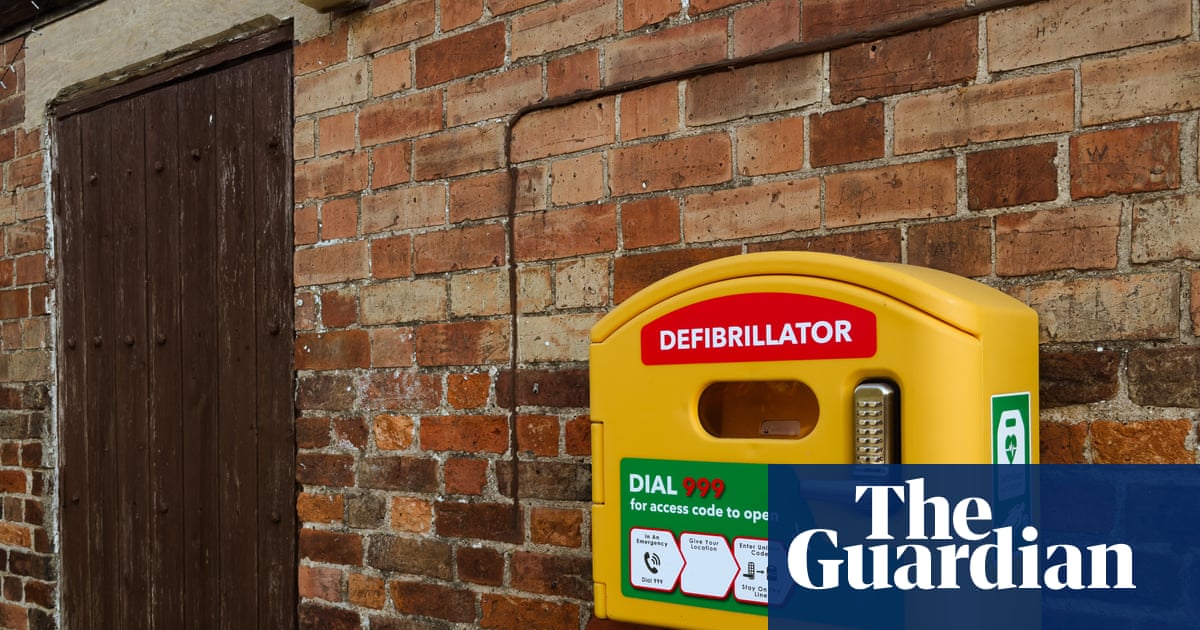
The British Heart Foundation has responded with a community campaign inviting areas across the UK to apply for 400 24/7 community defibrillators, targeting what it calls "defibrillator deserts" — places combining the longest distances with higher population density and deprivation. Barking and Dagenham, Liverpool, Southampton, Nottingham and Wrexham are among them.
"When someone suffers a cardiac arrest, every second is critical," said Sam Kennard, the BHF's community defibrillator manager. "Survival chances drop by up to 10% for every minute without CPR and defibrillation, so not having a defibrillator close by can have devastating consequences."
Adam Benson Clarke, clinical director at Resuscitation Council UK, said a cardiac arrest was "the most time-critical medical emergency" and that "nobody should be disadvantaged because of where they live". David Stockdale, chief executive of the British Healthcare Trades Association, put it more bluntly: "Where you live can still determine whether you survive a cardiac arrest."
Luke Taylor, the Liberal Democrat MP for Sutton and Cheam, who backs the campaign, called it "shocking that millions across the country are in a defibrillator desert" and urged the government to scrap VAT on defibrillators, pads and batteries to make community installation more affordable.
Source Reporters corrects errors promptly. Spotted something wrong? Tell us — read our editorial standards and corrections policy.