Highest-ever ocean temperatures recorded as El Niño intensifies
The world's oceans are on the verge of setting an all-time heat record as a powerful El Niño event gathers strength in the Pacific Ocean, new data from the UN European Commission's Copernicus Climate Change Service shows. In July, the average sea surface temperature outside the polar regions reached 20.96 °C (69.7 °F), surpassing the previous July record set in 2023 by 0.07 °C, according to agency data reported by *Nature* on 26 August 2026
By Source Reporters Newsdesk
Thu, 27 August 2026 · 2 min read
The world's oceans are on the verge of setting an all-time heat record as a powerful El Niño event gathers strength in the Pacific Ocean, new data from the UN European Commission's Copernicus Climate Change Service shows. In July, the average sea surface temperature outside the polar regions reached 20.96 °C (69.7 °F), surpassing the previous July record set in 2023 by 0.07 °C, according to agency data reported by *Nature* on 26 August 2026
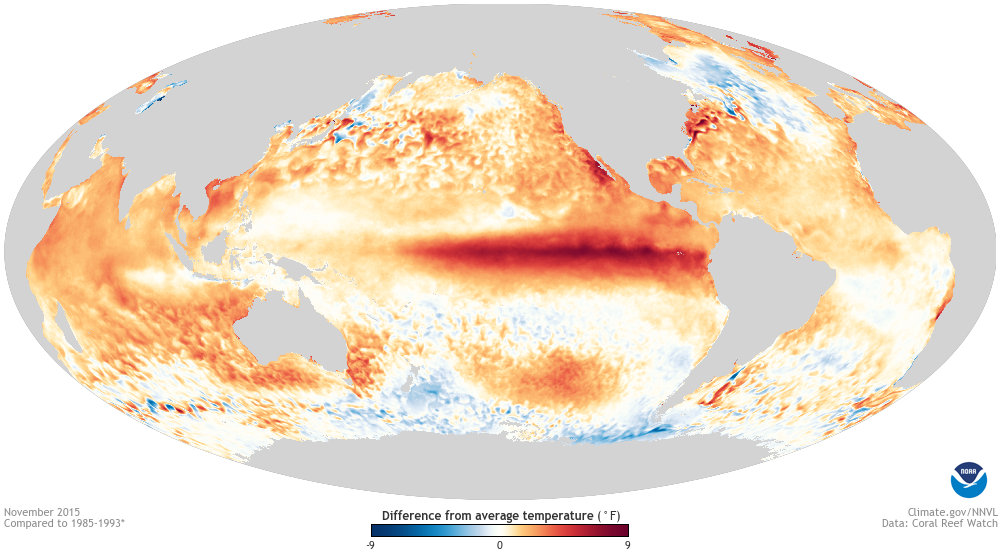
Sea surface temperatures are now hovering just a few hundredths of a degree below the all-time monthly record set in March 2024. Given that ocean temperatures typically continue rising for months after an El Niño emerges, the record will "almost certainly be broken this year", said Samantha Burgess, Copernicus' deputy director and a climate scientist at the University of Reading, in remarks to *Nature* The current El Niño — already the largest on record by a "mind-blowing margin" — is centered on a warm band of water across the tropical Pacific
Much of the anomalous heat stems from human-caused climate change amplifying the natural El Niño cycle, an analysis tool developed by Climate Central shows "It just spells trouble for the planet," said Kristina Dahl, a climate scientist at Climate Central, told *Nature* Wide areas of the northern Pacific and Atlantic Oceans, as well as much of the Mediterranean Sea, are also notably hotter than the 1991–2020 baseline average. The record-breaking heat — which follows a similar pattern to the record-shattering temperatures of 2023 and 2024 — "should definitely ring some alarm bells" about the planet's climate sensitivity, said Jens Terhaar, an ocean modeller at the University of Bern
The consequences of sustained high ocean temperatures extend beyond the climate system itself. Marine ecosystems — already stressed by years of record heat — face renewed pressure on coral reefs, which scientists describe as being in "a terrifying time" as mass bleaching events intensify Fisheries are also at risk: El Niño events are associated with steep declines in anchovy populations off the Pacific coast of South America, threatening food security for millions who depend on small pelagic fish. Ocean warming further undermines the seas' ability to absorb carbon dioxide from the atmosphere, potentially creating a dangerous feedback loop that accelerates global warming
**Sources:** Nature, csi.climatecentral.org
Source Reporters corrects errors promptly. Spotted something wrong? Tell us — read our editorial standards and corrections policy.