How Weather Forecasts Are Made and Why They Slip
Modern forecasts are remarkably accurate a few days out, then grow uncertain. Here is how they are made and why prediction has limits.
By Source Reporters Newsdesk
Thu, 23 July 2026 · 2 min read
Weather forecasting is one of science's quiet triumphs, so woven into daily life that its sophistication goes unnoticed. A prediction for tomorrow is now usually reliable, and one for several days ahead often holds up well, achievements that would have amazed forecasters of the past. Yet forecasts still lose their grip as they reach further into the future, and understanding both the method and the limit explains why.
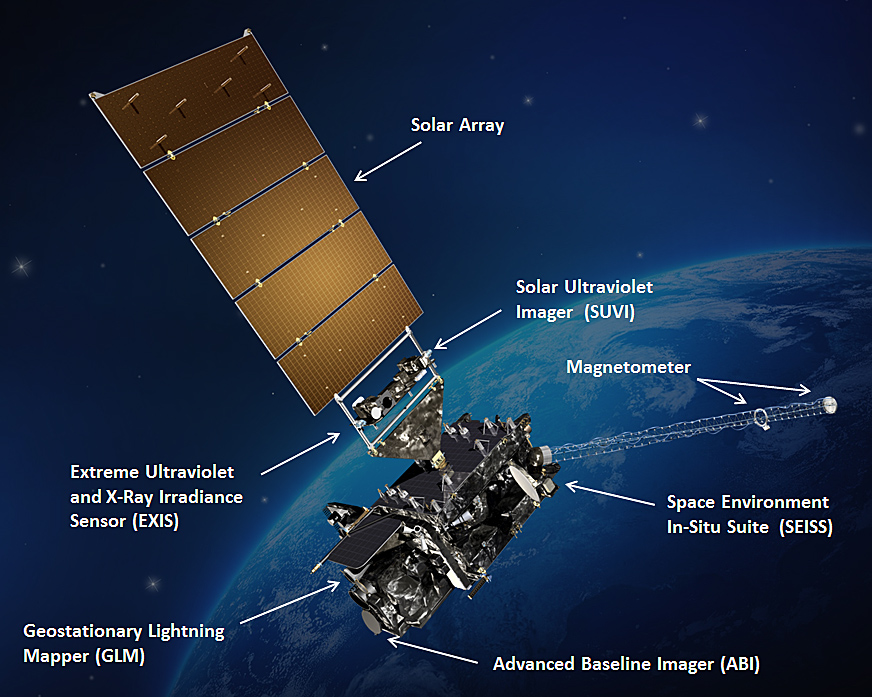
A modern forecast begins with an enormous act of measurement. Observations pour in constantly from weather stations, balloons, ships, aircraft, buoys and, above all, satellites, capturing temperature, pressure, humidity and wind across the globe. This flood of data builds a snapshot of the atmosphere's current state, the essential starting point, because to predict where the weather is going you must first know precisely where it is now.
That snapshot is then fed into powerful computer models. The atmosphere obeys the laws of physics, and those laws can be written as equations describing how air moves, warms, cools and carries moisture. Supercomputers apply these equations to the current conditions, stepping forward in time to calculate how the state of the atmosphere will evolve hour by hour. The result is a physics-based simulation of the weather to come, refined by decades of scientific improvement.
The reason forecasts eventually falter lies in the nature of the atmosphere itself. It is a chaotic system, meaning that tiny differences in its starting state can grow into large differences later on. Since our initial snapshot can never be perfectly complete or exact, small uncertainties are unavoidable, and they magnify as the simulation runs forward. A forecast a day ahead barely feels this, but by a week or two the accumulated uncertainty can overwhelm the prediction.
Forecasters have a clever way of coping with this chaos. Rather than running a single simulation, they run many, each starting from slightly different but plausible initial conditions. If these varied runs largely agree, confidence is high; if they diverge wildly, the future is genuinely uncertain. This is why forecasts increasingly come as probabilities, a chance of rain rather than a flat yes or no, honestly reflecting the spread of possibilities.
Knowing this makes forecasts easier to use wisely. A near-term prediction deserves real trust, while a long-range outlook is better read as a general tendency than a firm promise. The uncertainty is not a failure of the science but an inherent feature of a chaotic atmosphere, and modern meteorology's real achievement is not banishing that uncertainty but measuring it, and telling us honestly how much to rely on what it sees ahead.
Source Reporters corrects errors promptly. Spotted something wrong? Tell us — read our editorial standards and corrections policy.