What DNA Is and How It Shapes Living Things
DNA is often called the blueprint of life, but what is it really? Here is a clear guide to how this molecule stores and uses information.
By Source Reporters Newsdesk
Thu, 23 July 2026 · 2 min read
DNA is one of the most famous acronyms in science, invoked in everything from medicine to crime dramas, yet its actual nature is often left fuzzy. Stripped to essentials, DNA is a molecule that stores information, the set of instructions for building and running a living thing. Understanding how it does that reveals one of the most elegant systems in all of nature.
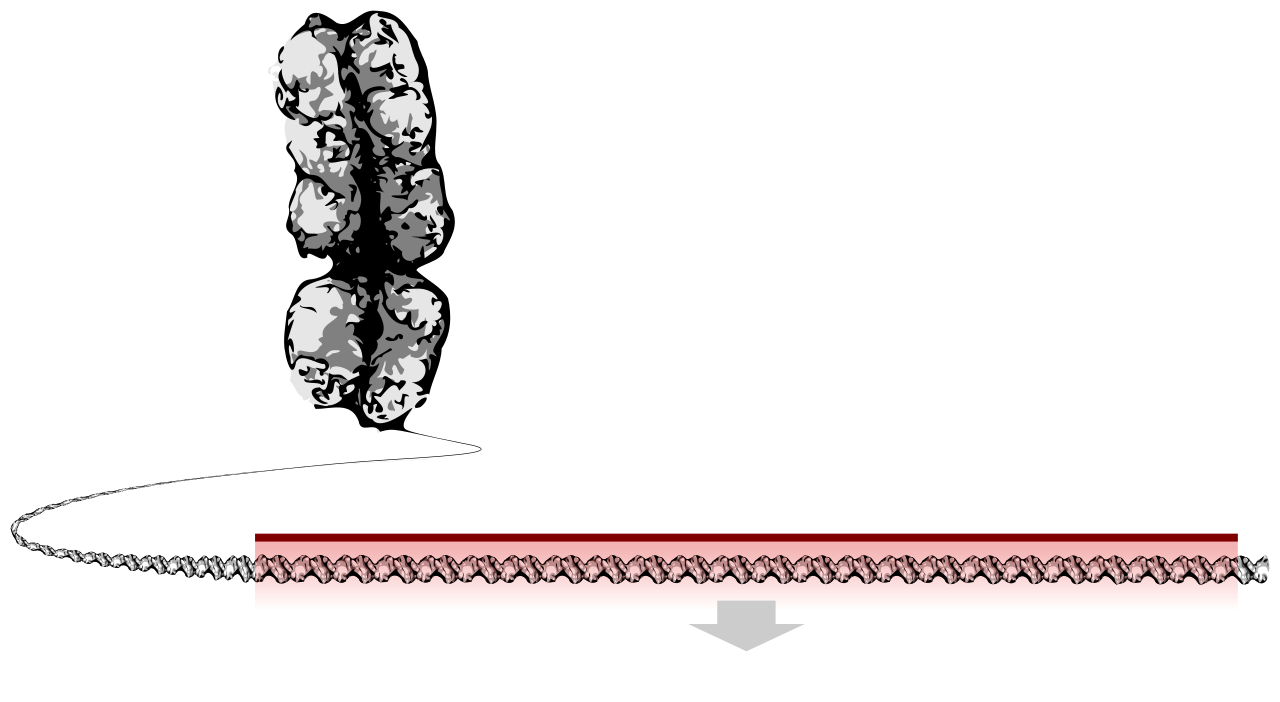
The structure is the key to everything. DNA takes the form of a long, twisted ladder, the famous double helix, and the information is written along it in a simple chemical alphabet of just four letters. The precise order of those letters, repeated across a vast length, forms a code. In the same way that the twenty-six letters of an alphabet can spell out any book, the four chemical letters of DNA, arranged in the right sequences, spell out the instructions for an entire organism.
Those instructions are organised into genes, stretches of the code that typically carry the recipe for building a particular protein. Proteins are the workhorses of the body, forming structures, carrying out chemical reactions and regulating processes, so the genes that specify them effectively direct how a living thing is built and functions. The full set of an organism's DNA, its genome, is a complete library of these recipes, copied into nearly every cell.
Heredity flows naturally from this design. Because DNA can be copied, its instructions pass from one generation to the next. You inherit your DNA from your parents, a mixture of their sequences, which is why families share traits. The reshuffling that happens as this material is passed on ensures that offspring resemble their parents without being identical to either, blending inherited instructions in new combinations.
The system is powerful but not perfect, and that imperfection drives life's variety. Occasionally the code is copied with a small error, or altered by outside factors, producing a change called a mutation. Many mutations have little effect, some cause disease, and a rare few prove advantageous. Over vast stretches of time, this slow accumulation of changes, filtered by survival and reproduction, is the raw material of evolution, gradually reshaping species across generations.
Understanding DNA as an information-storing molecule, written in a four-letter code and organised into genes, brings a great deal of biology into focus. Inheritance, disease, evolution and the sheer diversity of life all trace back to how these instructions are written, copied and occasionally changed. Few ideas explain so much of the living world from a single, elegant starting point.
Source Reporters corrects errors promptly. Spotted something wrong? Tell us — read our editorial standards and corrections policy.