Why the Night Sky Is a Window Into the Past
When you look at the stars, you are seeing light that left them long ago. Here is why looking out in space means looking back in time.
By Source Reporters Newsdesk
Thu, 23 July 2026 · 2 min read
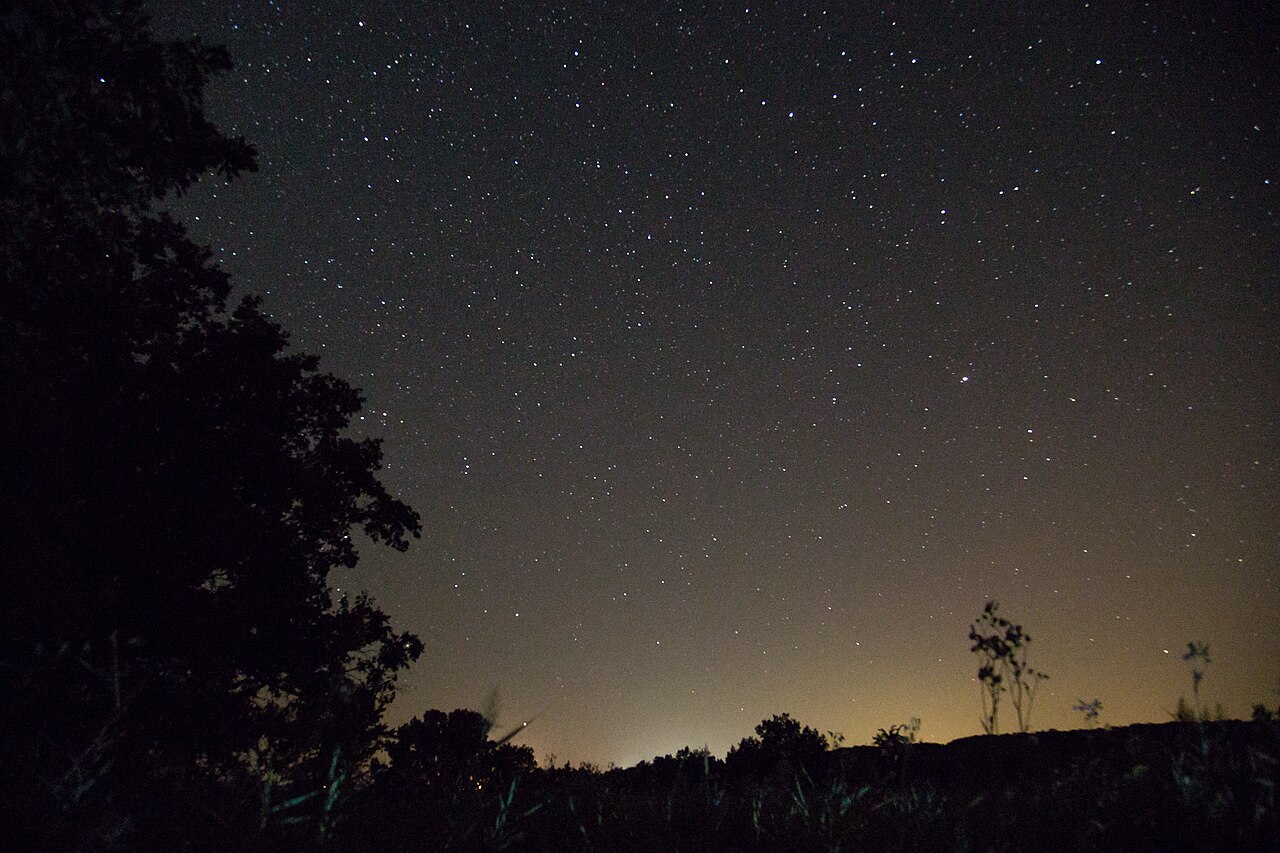
Look up on a clear night and you are doing something stranger than it seems. You are not seeing the stars as they are now, but as they were long ago, some by years, others by thousands or millions of years. The night sky is not a snapshot of the present universe but a layered window into the past, and the reason comes down to one of the most important facts in physics: light takes time to travel.
Light is astonishingly fast, but its speed is not infinite. It covers a fixed distance each second, and over the immense gulfs of space that adds up. Sunlight takes about eight minutes to reach us, which means we always see the Sun as it was eight minutes ago. If it somehow vanished, we would carry on seeing it shine for those eight minutes before darkness arrived. Every glimpse of the sky is a message that has been in transit.
Push further out and the delay grows enormous. The light from distant stars may have set off before you were born; the light from other galaxies may have begun its journey before humans existed. When astronomers observe a galaxy millions of light years away, they are quite literally seeing it as it was millions of years ago, because that is how long its light has been travelling to reach the telescope. The further away something is, the deeper into the past we see it.
This turns telescopes into time machines of a peculiar kind. By looking at ever more distant objects, astronomers look further back toward the early universe, studying how galaxies and stars appeared long ago rather than as they are today. Some of the most powerful observatories are built specifically to catch this ancient, faint light, allowing scientists to reconstruct the history of the cosmos by observing its distant, and therefore younger, regions.
There is a humbling consequence hidden in this. We can never see the universe as it is right now, only as it was when its light departed. A distant star we admire tonight might have changed dramatically, or even ceased to exist, in the time its light has been crossing space. What we call the present sky is really a collage of many different pasts, each arriving at once.
Far from diminishing the wonder, understanding this deepens it. The night sky becomes a kind of archive, its every point a record of a different moment in cosmic history, delivered to your eyes by light that has travelled unimaginable distances to arrive. To look up, once you grasp this, is to look back, and to see time itself written across the dark.
Source Reporters corrects errors promptly. Spotted something wrong? Tell us — read our editorial standards and corrections policy.