Moonshot Unveils Kimi K3, a 2.8-Trillion-Parameter Model It Says Rivals US Leaders
The Chinese start-up will release the system as open source on 27 July, making it the first freely downloadable model in the three-trillion-parameter class.
By Source Reporters Newsdesk
Wed, 22 July 2026 · 2 min read
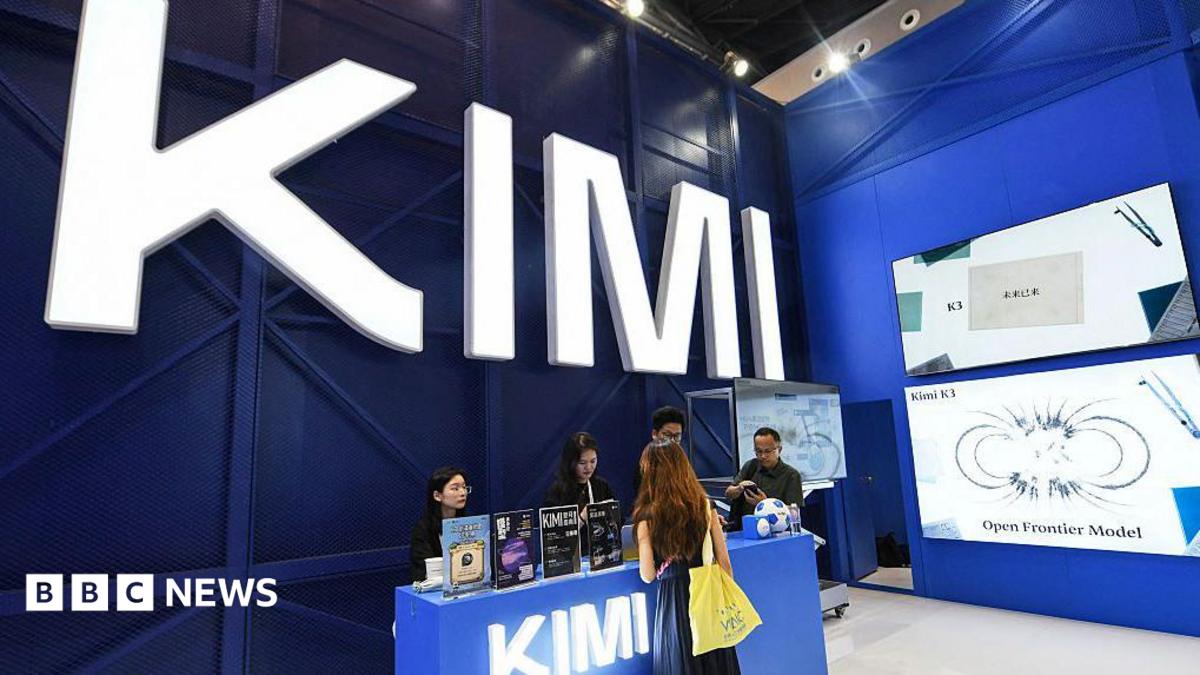
The Chinese AI start-up Moonshot has unveiled a model it says can rival the best from American firms, in a launch that will sharpen questions about how much of a lead US developers still hold.
The company announced Kimi K3, containing 2.8 trillion parameters — a rough measure of a model's scale and processing capacity. Its full capabilities across coding, knowledge work and reasoning will only become clear when it is released as an open-source model on 27 July.
That release date matters as much as the specification. Kimi K3 will be the world's first open-source model in the three-trillion-parameter class that can be freely downloaded, run and customised by outside developers. Where OpenAI's and Anthropic's flagship systems are closed and proprietary, K3's licence would allow anyone with sufficient hardware to modify it for advanced reasoning and complex software development.
The timing is sensitive. The launch comes weeks after the US government abruptly forced Anthropic to temporarily withdraw its flagship Fable and Mythos models over severe cybersecurity concerns. Washington has since lifted those restrictions, but the episode showed how the US now treats advanced AI software as critical national infrastructure, classing frontier models as national security assets subject to export controls. The rapid arrival of Kimi K3 suggests Chinese firms are advancing independently despite US restrictions on hardware sales.
Heavily backed by the domestic technology giants Alibaba and Tencent, Moonshot has risen quickly to the front of China's generative AI sector. In a statement the company said K3 is its "most capable flagship model to date", and noted it is built to operate with "minimal human supervision" for sustained tasks such as engineering and coding.
Independent evaluations lend some weight to the claim. Third-party assessments from Artificial Analysis and Arena.ai show the model performing on a par with leading US systems including OpenAI's GPT and Anthropic's Claude. In those benchmarks Kimi K3 ranked first in web interface engineering, outperforming Anthropic's Fable system in blind human-preference tests.
There are practical caveats. The model's size means running it locally requires substantial computing equipment, putting it out of reach of most individual developers and smaller companies regardless of the licence. But making a model of this class open-source could still disrupt Silicon Valley's commercial arrangements, which rest on paid access to capabilities that cannot be obtained elsewhere.
Investors reacted immediately, and not kindly to Moonshot's domestic rivals. Shares in Zhipu and MiniMax tumbled in Hong Kong by about 27% and 16% respectively — a sign that the market reads K3 as a consolidation of the Chinese AI field rather than simply a challenge to American firms.
Reported from the BBC.
Source Reporters corrects errors promptly. Spotted something wrong? Tell us — read our editorial standards and corrections policy.