Austria Opens Police Station in the House Where Hitler Was Born
After a decade of legal battles, expropriation and architectural competition, the building in Braunau am Inn has been refurbished beyond recognition to deter neo-Nazi pilgrims.
By Source Reporters Newsdesk
Wed, 22 July 2026 · 2 min read
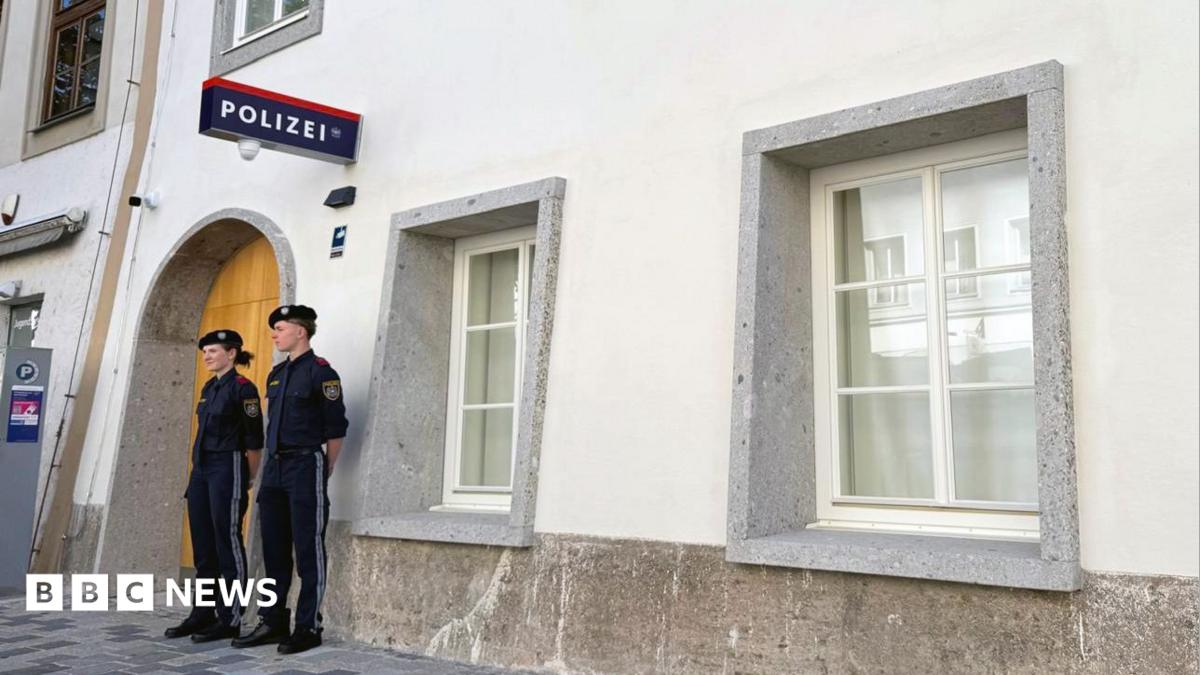
Austria has opened a police station in the house where Adolf Hitler was born, in the town of Braunau am Inn, ending years of controversy over what to do with the building.
The 17th-century former inn, where the Nazi dictator was born in April 1889, has been substantially refurbished and its facade altered. It had long been a headache for Austrian authorities, whose central concern was preventing it from becoming a site of neo-Nazi pilgrimage.
Hitler's actual connection to the address is thin. He lived at Salzburger Vorstadt 15 for only a few weeks before his family moved elsewhere in Braunau, and they left the town for good when he was three. He returned briefly in 1938, on his way to Vienna, after annexing Austria to Nazi Germany.
For decades the interior ministry rented the building from its former owner, a local woman named Gerlinde Pommer, paying a generous rent specifically to keep it out of the hands of extreme right-wing tourism. For many years a local charity used it as a day centre and workshop for people with special needs, but it was forced to move out in 2011 when Pommer blocked renovations. The house then stood empty for several years while the authorities and its owner argued over terms.
In 2016 Austria's parliament passed a law allowing the government to seize the property, paying Pommer compensation of €812,000 (£690,000). She later took the government to court arguing the sum was too low, and lost.
What to do with it proved harder than acquiring it. The interior minister at the time, Wolfgang Sobotka, said the building should be torn down and replaced — an echo of an earlier offer by a Russian MP who wanted to buy it and blow it up. That provoked a storm of criticism, with many arguing that destroying the house would amount to denying Austria's Nazi past.
In 2019 the government announced the police station plan and launched an EU-wide competition for architects. Millions of euros were then spent refurbishing the old yellow building, which now looks markedly different from before.
Not everyone accepts the outcome. Some had wanted a centre of responsibility confronting the Nazi past. Others, including the local historian Florian Kotanko, would have preferred the return of the Lebenshilfe charity.
"But even this charity organisation did not want to come back because they thought they would be used as a fig leaf for a political discussion, and so the government had to decide in another way," Kotanko told the BBC.
There is no sign on the house explaining its history, and the building carries security cameras to record the activities of any would-be pilgrims. The only thing linking it to Hitler is a stone on the street outside, erected in 1989.
Reported from the BBC.
Source Reporters corrects errors promptly. Spotted something wrong? Tell us — read our editorial standards and corrections policy.