Scientists say Antarctic ice loss can now be reliably forecast through mid-century
Improved modeling gives governments a rare head start on planning for sea-level rise, though researchers caution the forecasts still carry significant uncertainty beyond 2050.
By Source Reporters Newsdesk
Fri, 24 July 2026 · 3 min read
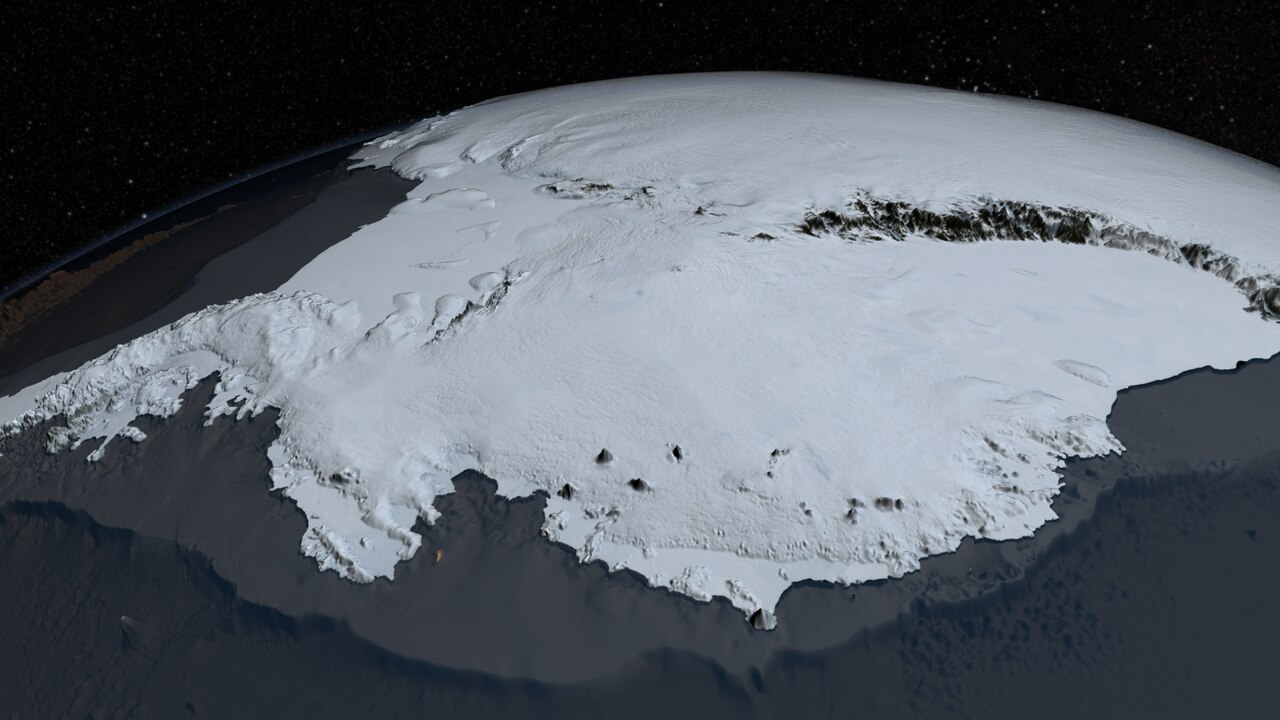
Scientists say they may now be able to reliably forecast Antarctic ice loss through the middle of the century, a development researchers describe as a rare piece of good news for governments trying to plan for sea-level rise — even as the underlying trend of accelerating ice loss remains unchanged.
Antarctica holds the vast majority of the world's freshwater ice, and even small changes in how quickly its ice sheets melt or slide into the ocean can have outsized effects on long-term global sea levels. Until now, much of the uncertainty in sea-level projections has stemmed not from disagreement over whether Antarctic ice loss will continue, but from how quickly and unevenly it will unfold across different parts of the continent, particularly the West Antarctic Ice Sheet, which sits on bedrock below sea level and is considered especially vulnerable to warming ocean water eating away at its base.
Researchers say new modeling approaches, drawing on improved satellite observation records and a better understanding of the physical processes driving ice-shelf collapse and glacier acceleration, now allow for meaningfully narrower forecasts of ice loss over the coming decades. That narrower range matters enormously for coastal planning: infrastructure decisions on sea walls, drainage systems, and managed retreat from vulnerable coastlines typically require decades of lead time, and planners have long struggled with sea-level projections that carried wide enough error bars to make specific investment decisions difficult to justify.
The improved forecasts do not suggest Antarctic ice loss is slowing — if anything, the underlying data continues to show acceleration in several key glacier systems, particularly in West Antarctica, where warm ocean water has been undercutting ice shelves that normally act as a brake on glaciers flowing into the sea. What has changed is confidence in the rate of that acceleration through mid-century, giving governments a clearer, if still sobering, basis for planning rather than a reason for optimism about the trajectory itself.
Beyond 2050, researchers caution that uncertainty widens considerably, since long-term ice-sheet behavior depends heavily on how much further global emissions rise or fall in the coming decades, as well as on poorly understood tipping-point dynamics in ice-shelf collapse that could accelerate loss abruptly rather than gradually. Some glaciologists have warned in past research that certain West Antarctic glaciers may already be committed to long-term collapse regardless of near-term emissions cuts, a scenario the new mid-century forecasts are better equipped to quantify than to prevent.
The findings arrive as coastal governments worldwide, from Pacific island nations to major cities including Miami, Jakarta and London, are increasingly incorporating sea-level projections directly into infrastructure and zoning planning. More reliable near-term forecasts are expected to help those governments prioritize which adaptation measures to fund first, even as the researchers behind the work stress that better forecasting is a planning tool, not a substitute for reducing the emissions driving the warming in the first place.
Climate scientists not involved in the research broadly welcomed the improved modeling, while noting that translating better forecasts into actual funded adaptation projects remains a political and financial challenge separate from the underlying science.
Source Reporters corrects errors promptly. Spotted something wrong? Tell us — read our editorial standards and corrections policy.